
Image Tool
Add an image to the canvas
Introduction
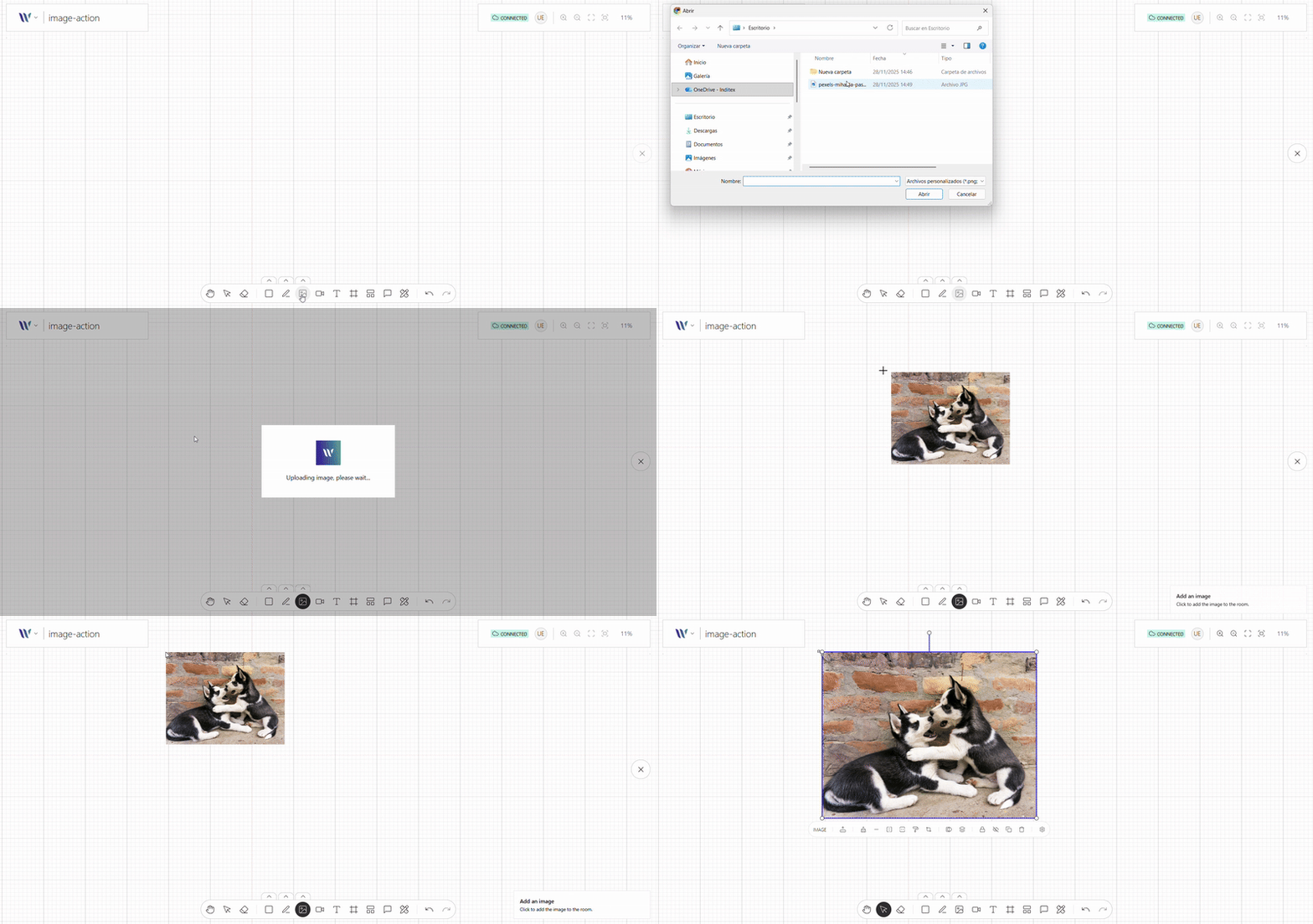
This action allows users to add images to the canvas by:
- Selecting a file and add it to the canvas on a position of its choice.
- Drag & Drop an Image from the same application to the canvas and add it to the canvas on a position of its choice.
- Drag & Drop an external Image to the canvas and add it to the canvas on a position of its choice.
- Copy / pasting an external Image to the canvas.
Once added, the image is rendered as an Image Node, ready for positioning, resizing, and collaboration.
This action supports various image formats: jpeg, gif & png. Ideal for visual references, diagrams, or creative content.
Dependencies
This action needs also registered on the Weave instance the following:
- Image node
Usage
Import the Action
Start by importing the action:
import { WeaveImageToolAction } from "@inditextech/weave-sdk";Register the Action
Then register the action on the Weave class instance.
const instance = new Weave({
  ...
  actions: [
    ...,
    new WeaveImageToolAction(),
  ]
})
Setup the action trigger
Setup on a button or any element on the UI the user can interact with on the action event:
const { nodeId } = instance.triggerAction("imageTool");Then select the image to upload (by showcasing a file select to the end user), and when the user
selects an image, the user can select where to put the image on the canvas, and when added, the image
is uploaded asynchronously using the defined uploadImageFunction that has the following signature:
(file: File) => Promise<string>.
For example on a button on React:
import React from "react";
import { useWeave } from "@inditextech/weave-react";
import {
  WEAVE_IMAGE_TOOL_UPLOAD_TYPE,
  WeaveImageToolActionTriggerParams,
  WeaveImageToolActionTriggerReturn,
} from "@inditextech/weave-sdk";

const MyImageToolTriggerComponent = () => {
  const inputFileRef = React.useRef<any>(null);
  const instance = useWeave((state) => state.instance);
  const [showSelectFile, setShowSelectFile] = React.useState<boolean>(false);

  React.useEffect(() => {
    if (showSelectFile && inputFileRef.current) {
      inputFileRef.current.click();
      setShowSelectFile(false);
    }
  }, [instance, showSelectFile]);

  const handleUploadFile = React.useCallback(
    async (file: File) => {
      const uploadImageFunction = async (file: File) => {
        const imageURL = await uploadImage(file);
        return imageURL;
      };

      instance.triggerAction<
        WeaveImageToolActionTriggerParams,
        WeaveImageToolActionTriggerReturn
      >("imageTool", {
        type: WEAVE_IMAGE_TOOL_UPLOAD_TYPE.FILE,
        image: {
          file,
          downscaleRatio,
        },
        uploadImageFunction,
      });
    },
    [instance],
  );

  return (
    <>
      <input
        type="file"
        accept="image/png,image/gif,image/jpeg"
        name="image"
        style={{ display: "none" }}
        ref={inputFileRef}
        onClick={() => {
          inputFileRef.current.value = null;
        }}
        onChange={(e) => {
          const file = e.target.files?.[0];
          if (file) {
            handleUploadFile(file);
          }
        }}
      />
      <button
        onClick={() => {
          setShowSelectFile(true);
        }}
      >
        Image Tool
      </button>
    </>
  );
};
Trigger the action
Finally a final user trigger the UI element that launches the action.
When active the user:
- Select the image to upload.
- Image is uploaded with the API the developer choses or has available.
- Once the image is uploaded, the user can click or touch on the canvas to place it where it wants.
Then the image is added to the canvas as a fully functional node—ready. This action integrates seamlessly with Weave.js's real-time state system, ensuring the new element appears instantly for all connected users.